Showing posts with label Frederator Studios. Show all posts

Wednesday, May 22, 2013

Old School Lane's Nickelodeon Tribute: My Life as a Teenage Robot with James Bevan


The first new original Nicktoon that debuted in 2003 was the last cartoon short that debuted in Oh Yeah! Cartoons! A cartoon that was mixed with action, science fiction, superhero, and drama. That cartoon was none other than My Life as a Teenage Robot that debuted on August 1, 2003. 


Joining me today once again is Manic Expression member James Bevan. James, welcome back to Old School Lane.

James- Glad to be back, Patty. I'm thrilled I have the chance to join you for another discussion of one of my favorite Nicktoons. Nice to see that we've got a new face here as well. 

 Patricia- The show was about a teenage robot named Jenny (real name XJ9) who is a robot built by a scientist named Dr. Nora Wakeman. She built Jenny to defend the world from aliens, villains bent on world domination, and natural disasters. However, Jenny is not interested in saving the world. She's interested in making friends, going to school, reading teen magazines, and fashion. While Dr. Wakeman built her into a powerful robot, she installed her mind similar to a teenage girl's personality. As time went on, Jenny became friends with her next door neighbors Brad and Tucker Carbuckle.

James- The premise alone is what makes this so great; it's not a standard superhero show or a teen slice-of-life series; it blends both genres very well to deliver a show that appeals to fans looking for action, comedy, and down-to-earth drama. What sells this are the main characters. Jenny (voiced by Janice Kawaye, who has also voiced Yuzu Kurosaki in Bleach and Ami in HiHi Puffy AmiYumi) is a young woman who has been sheltered most of her life and is learning to adapt to the new world that's opened up to her. She's a bit naive, easily taken in by fun new experiences, and subject to quick mood swings when upset (she was programmed with emotions). But overall, she's a kind person who just wants to help her friends and do what's right for others. Her "mother", Dr. Noreen Wakeman (voiced by veteran voice actress Candi Milo) is an interesting mix of mad scientist and overprotective parent. Initially she wanted to keep Jenny a secret from the outside world, called upon only to prevent disasters, but gradually accepted that she deserved her own life. Dr. Wakeman has a number of amusing quirks, such as adding syllables to certain words, misusing slang, and looking for the prospect of an invention or scientific discovery in almost everything. Despite her age, she's no pushover, capable of holding her own against serious threats.


The Carbunkle brothers are a mixed bag. Brad (voiced by Chad Doreck) is one of the show's main comic relief characters. He's very enthusiastic, sometimes tending to act before he thinks, which can get him and his friends into very strange dilemmas. He also fancies himself a ladies man, with his attempts to charm the girls he finds attractive often ending up making him look foolish. But in spite of his flaws, Brad is a pretty compassionate, intelligent guy who frequently helps find solutions to the issues he and his friends get caught up in. Tucker (voiced by Audrey Wasilewski) is probably my least favorite character. I know the writers were going for an "annoying little brother" trope, but he's just TOO annoying. Overly-energetic, manipulative, selfish, there aren't really many redeeming factors I can find with him. That's just me though.
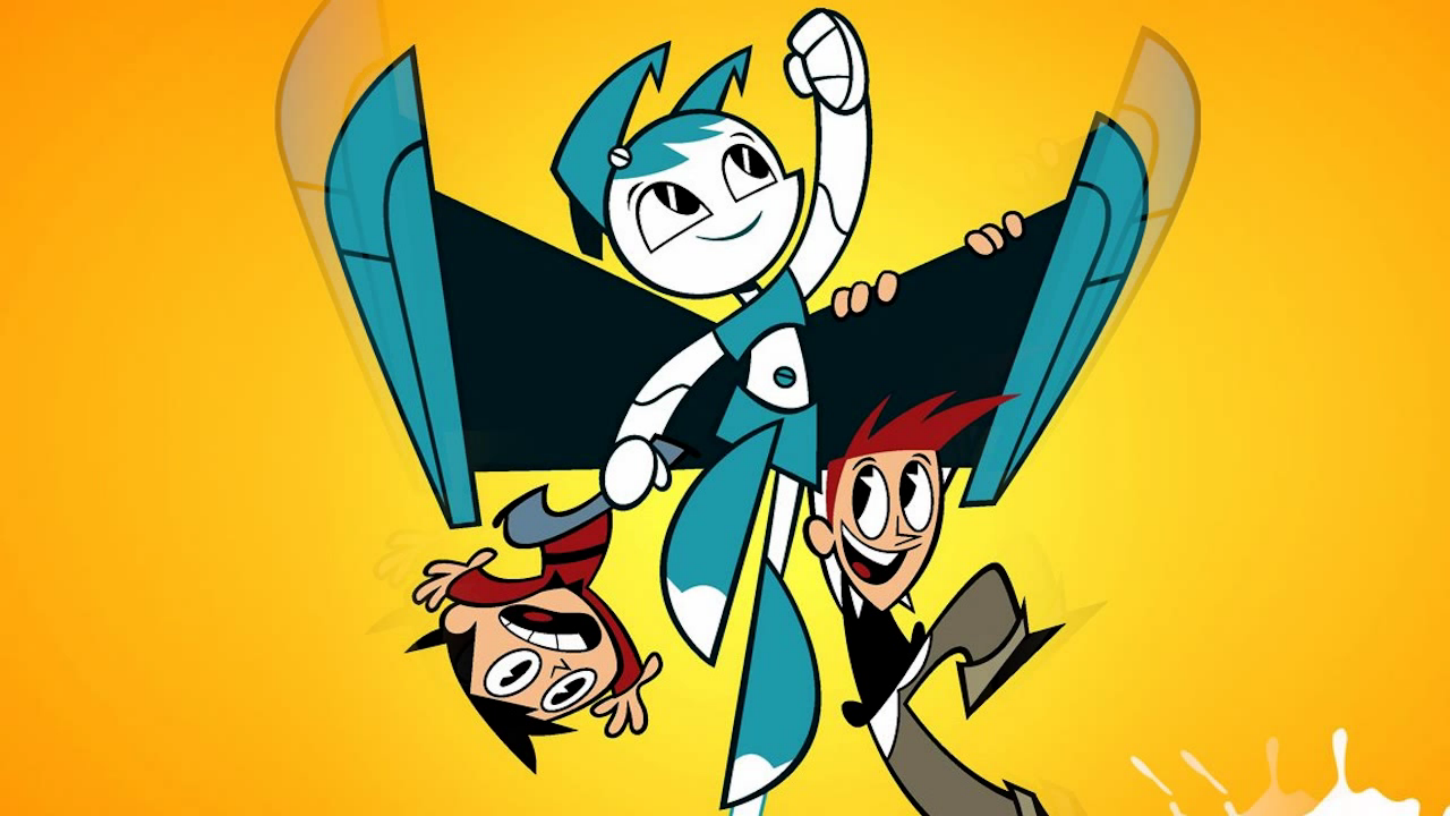


Rounding out Jenny's circle of friends is the incredibly geeky Sheldon.
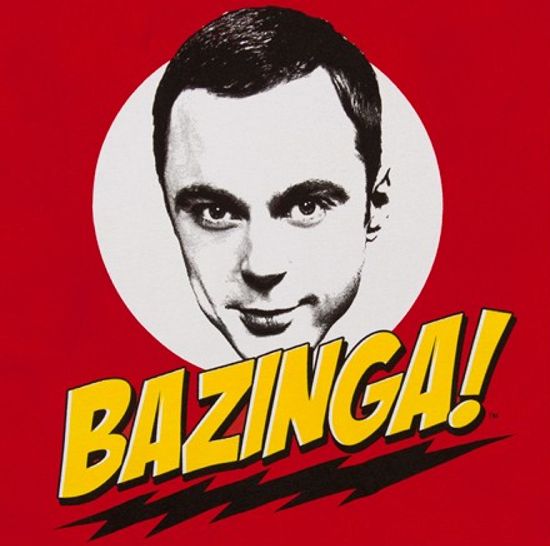

Wrong Sheldon.
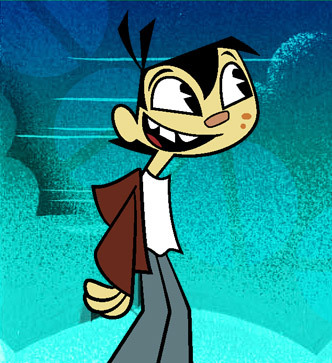


That's the one. Voiced by Quinton Flynn (best known as Raiden from the Metal Gear Solid series), Sheldon is the stereotypical high-school nerd taken to the extreme. He's socially-awkward, has a bad complexion, a nasally voice, and a heart of gold He's incredibly proficient with technology, capable of building machinery so advanced that Jenny often uses some of his inventions as upgrades. He actually has a romantic interest in Jenny, making him a literal technophile, and has made repeated attempts to get her to fall in love with him, even creating a mech suit to pose as a robotic superhero known as The Silver Shell. It's sweet, but at the same time, a bit disturbing for a show aimed at young viewers.


Patricia- The show was created by Rob Renzetti. While working on various cartoons such as Batman: The Animated Series, Two Stupid Dogs, and Dexter's Laboratory, he created and developed a pilot called My Neighbor was a Teenage Robot


But he put it on the side to try to make a TV series of a few shorts called Mina and the Count. The synopsis was about a little girl named Mina who befriends a vampire known as the Count. He presented the Mina and the Count shorts and a few other shorts he created to Cartoon Network and Nickelodeon, but they rejected them. 


Afterwards, he went to work on other cartoons such as Family Guy, The Powerpuff Girls, and Samurai Jack before he decided to go deeper into his concept of his first short. Fred Seibert saw the short and liked it. The short eventually became a TV series.

James- I loved Mina and the Count; Mark Hamill was great as the titular beleagured vampire. Pity that show never made it to series, but at least we got another great show from Renzetti. I have to say, though, I wish some aspects from the pilot short would have been retained in the full show. I liked the different designs used (especially for Jenny and Dr. Wakeman), and I thought the electronic undertone to Jenny's voice was a bit of a nice touch.

Patricia- Some of the great things about My Life as a Teenage Robot were the villains. The one villain that everyone remembers in Teenage Robot was Vexus, the leader of Cluster Prime, a planet that is inhabitated by robots. Vexus even tries to lead Jenny to join Cluster Prime since she's a robot and she would fit in with them more than with the humans who mostly don't understand her. Not to mention she's voiced by Eartha Kitt, whose awesome in anything she does.


James- Definitely. Miss Kitt (may she rest in peace) was absolutely phenomenal as Vexus. Cold, strategic, manipulative, she was definitely a force to be reckoned with. I really did like the concept of the Cluster as a recurring antagonist; a fully mechanized society that believes robots are superior to organic life, yet they're always bested by a robot who fights for co-existence rather than dominance. And while almost all of their plans involved reprogramming or converting other robots to aid in their conquest, there was always a bit of variety to keep the threats fresh. The variety also extended to their visual designs; every soldier of the Cluster empire had a unique build based on an insect motif like beetles, flies or bees. 

The Cluster wasn't the only threat Jenny had to deal with, though. Much like Danny Phantom, Teenage Robot had a recurring rogues gallery of incredibly strange adversaries that would cause grief for Jenny and her friends. Some of her more noteworthy foes included Vladimir, aka "Mr. Scruffles" (voiced by Kevin Michael Richardson), a lab rat seeking revenge against Dr. Wakeman for the disfiguring experiments she subjected him and other mice to, the Mad Hammer Brothers, a pair of criminal construction workers that bear a close resemblance to Mario and Luigi, and Armagedroid (also voiced by Richardson), a titanic robot programmed to eliminate all weapons on Earth, even if it means destroying the planet in the process.

Patricia- What many people seem to not realize is that Jenny was the first true hero in Nickelodeon with actual villains. While you can say that there were other shows such as The Secret World of Alex Mack, Space Cases, Butt Ugly Martians, and The Adventures of Jimmy Neutron: Boy Genius that implicated a villain, My Life as a Teenage Robot was a show about a person who was designed to save the world from destruction and/or world domination. Later shows such as Danny Phantom, El Tigre, Tak and the Power of Juju, Avatar: The Last Airbender, and The Legend of Korra would have a similar premise. It's something that I find interesting.


James- Definitely. What also helped strengthen the series was how it focused on Jenny's social life. As a robot, she's a true outsider, and her efforts to be accepted by her peers have more impact since her peers are, essentially, all of humanity. The writers did a stellar job with stories that show her dealing with people who are prejudiced against machines, augmenting herself in the hopes of better fitting in, even dealing with the standard teen problems of unrequited crushes and bullies... though when your body is stocked with a weapons system that could put most small dictatorships to shame, harassment shouldn't be that much of a problem. As cliched as this may sound, despite being mechanical, Jenny is well developed as an incredibly human character. Her desires, her weaknesses, her interests - all are well crafted to make her a well rounded protagonist, perhaps one of the strongest central characters in Nicktoons history.

I also have to mention that the art style is great. The development team at Frederator went for unique pseudo-retro style that blends 60s sci-fi like The Jetsons with the classic Fleischer cartoons. It seems like an odd mix, but it actually works very well. The stylized designs give each character a unique, recognizable appearance, and since they didn't obsess over incredibly fancy animation, it meant that the show's success relied on its characters and plot, not simply the visuals. It was also a nice touch that the crew left in subtle homages to the animation style that inspired them, such as the popular after-school hangout being called Mezmer's after Felix the Cat's creator Otto Messmer, and of course the very obvious homage to animation legend Walt Disney in the character of eccentric theme park owner Uncle Wizzly. 


Patricia- Agreed! With the exception of As Told by Ginger, many of the other Nicktoons at the time didn't have their characters grow and develop over time. But with My Life as a Teenage Robot, we see Jenny from a naive, confused teenage robot to a strong, capable hero. We see Dr. Wakeman from a tough, strict, scientist to a more open-minded person who has a love and care for Jenny. We also see Sheldon from a geeky nerd to a more confident person. Things about this show work so great! Also I have to commend on the art style as well. Many other Nicktoons tried to either do animation that was common at the time or trying to get into the 3D realm that many other cartoons did in the 2000's. But with My Life as a Teenage Robot, it was so nice to go for a more retro look when most animators tried to go cutting edge and "innovative". We hadn't seen a classic art style like this since The Ren and Stimpy Show so it was nice seeing it here on Teenage Robot!

Unfortunately, as great as the show sounded, it never got a lot of views from many people and the show was eventually cancelled after 40 episodes. Rob Renzetti went on to work on other shows such as being a supervising director for Foster's Home for Imaginary Friends, a story editor for the first two seasons of My Little Pony: Friendship is Magic, and currently being a supervising producer on Gravity Falls. While he hasn't created another show since Teenage Robot, he certainly left a huge impression on what a Nicktoon should be despite many people not really giving too much regards for it. Overall, it's an overlooked gem with great characters, classic animation, and fantastic action that is worth checking out. Definitely one of my favorite Nicktoons of all time!
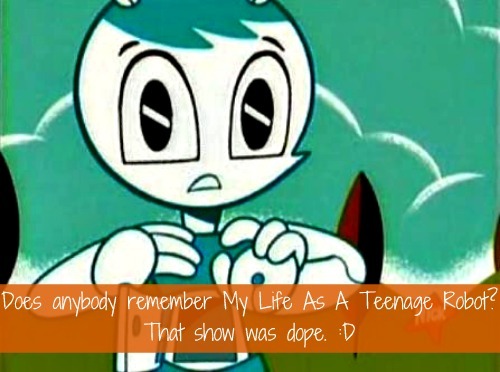


James- Same here; this is definitely one of the best series in Nick's history. With all the recent reboots, I'm holding out hope that maybe we might see a revival of this show in the future, even if it's just for a mini-series. Of course, it won't be the same since Eartha Kitt is no longer around to voice Vexus. But there were occasions when Cree Summer filled in for the late Ms. Kitt, and did a pretty stellar job, so she could be a good replacement. Though I do worry that it might affect fans the same way a possible revival of Reboot would; without Tony Jay as Megabyte, would the character have the same impact they did when we grew up watching it?

Patricia- I'm not sure. We'll see if they'll be interested in a possible reboot. That would be cool to see. That concludes our review of Teenage Robot. James, once again, thank you so much for joining me on this collaboration review. Hope we do it again soon.

James- Thanks again for having me, Patty. Always great to talk about classic shows with you.


Patricia- That's all for now. Tune in next time as we have Nickelodeon's first teen sitcom featuring a then popular celebrity. Romeo! 


Hope to see you around Old School Lane soon. Thanks for reading!

-Patricia and James


Monday, January 28, 2013

Old School Lane's Nickelodeon Tribute: ChalkZone

With the exception of The Fairly Oddparents and Invader Zim, Nicktoons in the early 2000's weren't doing very well. Butt Ugly Martians was cancelled around February 2002 after low ratings. With the success of The Fairly Oddparents, it was time for another cartoon short from Oh Yeah! Cartoons to get its own TV series. On March 22, 2002, ChalkZone debuted on Nickelodeon. 


The show was about a 10-year-old boy named Rudy Tabootie (voiced by E.G. Daily) who has a love for drawing cartoons. One day while going through detention due to something he didn't commit, he comes across a stick of magic chalk. He draws a hole into the chalkboard and discovers a world made out of chalk. One of Rudy's former chalk drawings, Snap (voiced by Candi Milo), explains to Rudy about chalk world known as Chalkzone. It's where everything that was ever erased end up and live. Rudy becomes accustom to hang around there and have fun adventures with Snap. Along the way, Rudy makes a new friend in school named Penny Sanchez (voiced by Hynden Walsh), a smart, intelligent girl who mostly focuses on math and logic than anything. She tags along with Rudy and Snap on their many adventures in Chalkzone. In every episode, we have a quick episode involving with Snap known as "Snapisodes" and a 1 minute music video with Rudy and the gang singing different songs from different genres. 


The show was created by Bill Burnett and Larry Huber. Burnett was the creative director for Fred/Alan Inc around the 80's doing the ads and promos for Nick at Nite, VH1, MTV, and Comedy Central. In fact, Burnett himself came up with the name of Comedy Central for that channel. In the mid 90's when Fred Seibert was the last president of Hanna Barbera, Burnett was hired to become the Vice President of Creative Director for the company. During his time, he was a story editor for Cow and Chicken. He wrote one of the most iconic episodes The Ugliest Weenie. He even wrote the lyrics to the song.


Larry Huber had worked on Hanna Barbera for many years working on the animation for Wacky Races' spinoff show The Perils of Penelope Pitstop before he left to work for Ruby-Spears. Around 1990, he came back to Hanna Barbera working on Two Stupid Dogs and Fish Police. In 1994, he was hired to oversee production for Fred Seibert's What a Cartoon. He even created a few cartoon shorts for the program. When Hanna Barbera was bought by Ted Turner in 1996, he went to oversee production for Seibert's other cartoon series Oh Yeah! Cartoons. That was where he and Burnett met and eventually created ChalkZone. 

"It would be hard to find two guys with such incredibly diverse opinions–political, social, and otherwise–who work so well together that they can make a show as creatively in sync as ChalkZone. We drew on each other’s talents and styles, as well as our own eclectic viewpoints, to produce an entertaining, well-rounded show that features many different perspectives. My specialty is graphic drawing, and Bill’s is music. As a musician and performance artist, Bill is a boisterous, outgoing type of guy. I’m a little more laid-back and reserved. But our personality differences are really the strength of ChalkZone, because if two partners think the same way, then one of them is certainly unnecessary", said Larry Huber in a 2007 interview with Frederator Studios. 

"ChalkZone is where Larry’s interests and mine converge. It’s a high-concept show about an alternate universe that’s really trippy when you think about it. In this universe, any place on Earth–a classroom, the “specials” board at a restaurant, or a hopscotch court–can be a portal to another world, where all the things that people have drawn over the centuries still live. The idea of ChalkZone is very empowering to kids: when they create a work of art, they’re actually bringing something to life", said Bill Burnett in the same interview.


When ChalkZone debuted, it had the highest ratings for a new show during that time with over 4 million viewers tuning in. It continued to become one of the most popular Nicktoons to air during the time alongside with Rugrats, Hey Arnold, SpongeBob SquarePants, The Fairly Oddparents, and Invader Zim. The show lasted for 4 seasons ending its run on November 21, 2009. As time went on, the show garnered a ton of hate from many people. I'm not kidding when I say that I have never seen this much hatred for a Nickelodeon show when doing this tribute, with the exception of Nick News with Linda Ellerbee. The following reviews were and I quote:

"Here we go again another dumb show from Nick. Except this one involves a boy and a piece of pathetic chalk. Everything about this show is horrible: the animation, the characters, and especially the music videos. The theme song is the most annoying song I've ever heard. There was a time when Nick aired good shows. Some of my favorites include: Rugrats (pre-Dil and Kimi), Are You Afraid of the Dark, Rocko's Modern Life, and Double Dare. These shows made Nickelodeon what they are and Nickelodeon doesn't even air them anymore. That's not right. Nickelodeon should really go back to what it used to be. 

Overall I give this 0/10 stars and hope that they take it off Nickelodeon and put it on Noggin. That is where it belongs."

"I decided to quit life and do drugs when I saw ChalkZone. My summary lied. Don't do drugs. Now that the public service announcement is out of the way, now I can say how bad this show is. This show TRIES to be cool, but they stank. I bet even Satan hates Chalkzone. The animation is bad, the music is bad (Oh GOD the music is bad.) The Voice acting is terribly cheesy, as are the jokes. Now here's the worst part. In every episode, they have a music video. The music is so bad, it's insulting to every insturment in the universe. NOW here is an example of Chalkzone music lyrics "WE LIKE TO BOOGY! WE LIKE TO BOOGY! WERE IN A ZONE!" Now Sing that ten times, and there is your song. Every little child I know despises this show, including everyone ELSE I know.

I give this show a -5 out of 10".

"Chalkzone is a cartoon that sounded really good and creative, but when shown it just fails. The show is about a kid named Rudy, who one day while in detention comes across a piece of chalk that allows him to enter into another world called Chalkzone. There he meets one of his many creations named Snap and with his best friend, Penny, they go on adventures through the zone and try and keep Chalkzone a secret. Idea wise, this show had a promising future, but the show is executed in a manner that destroys the charm of this show. The characters in this show are just boring and underdeveloped. The teacher is a generic jerk who hates fun, Penny is a stereotypical smart girl who always enforces rules, Snap is annoying, the bully is just generic, and Rudy is also annoying but not as bad as Snap. As for the stories, they are actually pretty decent and has some creativity to them, but I have seen better. I never found a funny moment in this show at all, and I wasn't expecting a lot, but I never heard or saw anything that made me laugh, maybe a chuckle or snicker here and there, but nothing else. Then at the end of each episode, we are treated to a music video with the gang, and the songs are really irritating and bad. So what's the purpose of them at all? They aren't entertaining at all. This show was just a disappointment and a failure. It could have been an instant classic, but Chalkzone was marred by bad humor, terrible characters, and unnecessary music videos. There's no real value to this show at all."

Come on, people. The show isn't that bad! Trust me, I've seen WAY worse when working on this tribute. Watch one episode of The Brothers Flub, Pelswick, and Butt Ugly Martians and you'll see what a really bad Nicktoon is. While it's not up-to-par with the classic Nicktoons such as Rugrats, The Ren & Stimpy Show, and Rocko's Modern Life, the creativity is really something to behold! This is one of the most unique concepts of a cartoon that I've ever heard of. While the characters are very basic, they're still solid nonetheless. I absolutely love the animation and the most of the music is actually really good. In my opinion, it's very underrated and doesn't deserve the hate it has been getting over the years. Yes, it's not perfect by any means. Yes, some of the jokes fall a little flat and it does tend to be slow in each episode, but that doesn't mean it's bad. It's very atmospheric and artistic. It combines Huber's artistic background and Burnett's music background and the end result is a really solid Nicktoon. I recommend that you check it out if you haven't seen it in a while. 


That's all for now. Tune in next time as we have two very special interviews from the people behind ChalkZone. Hope to see you around Old School Lane soon. Thanks for reading. 

-Patricia

Monday, January 14, 2013

Old School Lane's Nickelodeon Tribute: The Fairly Oddparents

The last Nicktoon to air in 2001 was a cartoon series that is still on the air to this day. That show is none other than The Fairly Oddparents. 


The show is about a 10-year-old boy named Timmy Turner who has a crummy life surrounded by his dimwitted parents, his cruel babysitter, a mean bully, and a crazy fairy-obsessed teacher. When he wishes on an 8 ball, two fairies named Cosmo and Wanda come along and grant Timmy's wishes. Most of the wishes that Timmy wishes cause huge problems around his home, his friends, family, or himself. He has crazy, zany adventures with Cosmo and Wanda while they take on enemies or villains.


The show was created by Butch Hartman, a young unknown animator who worked as an in-between artist for movies such as An American Tail and Pocahontas before working on a few cartoon shorts in Cartoon Network's What A Cartoon created by Fred Seibert. When Seibert created Oh Yeah! Cartoons for Nickelodeon, Hartman had collaborated with a few animators creating cartoon shorts before he would create a small cartoon short called The Fairly Oddparents. 

"I wanted to be able to take a main character and easily move him from place to place so I thought magic would be a good way to do that. And it was funnier if the character didn’t have control of the magic but had to depend on someone else for it so that’s where the fairies came from", said Hartman in a 2011 interview with examiner.com. 


The short became a huge success and Hartman created 9 more shorts throughout Oh Yeah! Cartoons' 3 year run. Eventually, a new independent animation company created by Fred Seibert named Frederator Studios produced The Fairly Oddparents as their first produced cartoon. It was the first cartoon short of 3 cartoon shorts from Oh Yeah! Cartoons to be made as a TV series for Nickelodeon. There were a few changes from the cartoon shorts compared to the TV series. First were some of the voice actors. Timmy Turner was originally voiced by Mary Kay Bergman, who voiced all the female characters from South Park. However, she committed suicide in 1999. The voice actor was replaced by Tara Charendoff, now Tara Strong, known for voicing other characters like Bubbles from The Powerpuff Girls, Dil Pickles from Rugrats, and Barbara Gordon/Batgirl from Batman: The Animated Series. 


Cosmo was originally voiced by Phil Hartman, who appeared in The Pee-wee Herman Show and Pee-wee's Playhouse as Captain Carl, a member on Saturday Night Live, NewsRadio, and Third Rock From the Sun. However, he was tragically murdered by his wife in 1999. He was replaced by Daran Norris, who also voices as Mr. Turner and Jorgen Von Strangle.


The second difference between the shorts and the TV series was its animation. It wasn't as bright, colorful, and smooth as the TV series due to its short budget. The third difference was the personalities and appearances of some of the characters. In the cartoon shorts, we never saw Timmy's parents faces similar to the parents from Cow and Chicken. Also they were a lot more smarter and intelligent, while being a tad bit clueless. In the TV series, we see what they look like and they are portrayed a lot more clueless and dimwitted. Cosmo's personality was portrayed clueless and dimwitted as well in which he was more intelligent and smooth talking in the cartoon shorts. Nonetheless, the show kept in tact what the shorts introduced: a young 10-year-old boy with fairy godparents. Along the way, he had to deal with villains such as his crazy fairy obsessed teacher Mr. Crocker (voiced by Carlos Alazraqui), the anti-Fairies, his imaginary friend Gary, the bully Francis, and his babysitter Vicki. With the help of Cosmo and Wanda, Timmy stops at nothing to make sure that things are back to normal and his secret of his fairies are kept within himself.


When the show first came out, it was an instant hit! It was the second most popular Nicktoon next to SpongeBob SquarePants. It was funny, fastly paced, and witty. As the seasons progressed, the show had gotten more and more popular within its fans. However, in my opinion, the more recent seasons of The Fairly OddParents has gotten to be less funny and more mean spirited. Almost every character in the show has gotten to be really mean and unlikable and some of the wishes that Timmy has made has gotten to be dumber and dumber. While a lot of people said that the introduction of Cosmo's and Wanda's son Poof ruined the series similar to when Rugrats introduced Dil, I felt that the change of writers of the show and the high constant pressure of keeping the show fresh a decade later was its downfall. Today The Fairly Oddparents is the second longest Nicktoon on the air and I highly recommend checking out earlier seasons and some of its TV movies. As for the newer seasons, they deserve a pass.

That's all for now. Hope to see you around Old School Lane soon. Thanks for reading.

-Patricia


Tuesday, September 25, 2012

Old School Lane's Nickelodeon Tribute: Interview with Fred Seibert

Out of all the people that we had gotten to interview for this tribute, we couldn't have been more honored to get a hold of by none other than the man who had revolutionized television forever. The man, alongside with his partner Alan Goodman and many others, had created logos, promos, and advertisements for networks like MTV and Nickelodeon as well as saved Nickelodeon from bankruptcy and Hanna Barbera Cartoons Inc. from shutting down and starting the careers of many animators such as Craig McCracken, Van Partible, Bill Burnett, Butch Hartman, and Genndy Tartatovsky. Ladies and gentlemen, please sit back, relax, and enjoy this interview by the president of Frederator Studios, Fred Seibert.

Kevin- What is your favorite cartoon character?

Fred- Of the Frederator characters? You don't think I like any one kid more than another, do you?

Kevin- What were your favorite cartoons growing up?

Fred- Huckleberry Hound, Bugs Bunny, and The Flintstones.


Patricia- Who were your influences?

Fred- My Mom and Dad, first and foremost. Next biggest were The Beatles, who came to America when I was 12 and led my way from being a chemistry major into music and the media. They're the ones who showed me you could be artistic and commercially successful without any compromise whatsoever.

Patricia- Did your parents support your decisions of what you wanted to do with your career?

Fred- My parents were scientists who really thought I would follow in their footsteps; I was a real science and math geek. But, at the same time, they always encouraged me to find what I loved and chase it. When I wanted music lessons at six they were all for it, and when I formed rock bands in the wake of the British Invasion of the mid 60s, they were at everyone one of our gigs. They were pretty confused when I dropped out of a science major and announced I was going to be a record producer (they had no idea what that was; truth be told I don't think I did either), but once they saw I'd made my mind up, they went along. When I started my first company (Oblivion Records: http://frdr.us/GELe9q) they at least realized that I wanted to make a living at my passions.

Patricia- Can you tell us the story of the how the iconic Nickelodeon splat logo came about?

Fred- Well, it's a long story, and you might want to read more of it here: http://frdr.us/vLTQmg (or you can pull any quotes for the interview, if you'd like). And, the Nick logo wasn't a "splat" at all, at least not only a splat.

In the early 1980s, I was the original creative director at MTV and had developed their iconic logo with Manhattan Design, the company of my oldest childhood friend, Frank Olinsky. One it's most distinctive innovations was the fact that it wasn't a completely fixed entity, with "official" colors and uses. It seemed to me that if we were designing for television, a moving picture medium, it was foolish to design logos for print usage, only to hand them over to "motion graphic" specialists who would try to figure out how to make the darned thing move. Frank and his partners solved that problem up front.


By the time the Nickelodeon assignment came up, I'd left MTV Networks (Nick's parent company) to form Fred/Alan, Inc. with Alan Goodman; we were the first "branding" company in television. Tom Corey and Scott Nash of Corey, McPherson, Nash in Boston, were among the only other designers we worked with that understood that notion of designing for movement so we asked them to develop the Nick logo with us. They were a bit skeptical, especially because the name was ridiculously long, couldn't be spelled by any kid anywhere, and didn't really mean anything to anyone in the late 20th century. Eventually, we convinced them to help.

Everyone was hoping for some of that MTV logo magic, and when Tom and Scott came in with a one color (Pantone orange #021) we thought they lost their minds. Where was the action, the kineticism, the movement we were looking for?

Then Tom and Scott showed us that, in fact, there wasn't one logo at all, but 100, 1000, 1 million if we wanted. Any shape we wanted could be a Nick logo, as long as it was Pantone #021, and had a certain Nickelodeon logotype inside. (Here's 168 variations: http://frdr.us/GEGyCu). They showed us how we should just slap it on top of whatever was happening on the screen, and that the orange ("a color rarely found in nature") thing would stand out really clearly.


After a bit of pushback from the company's management, we prevailed, and for 25 years our logo ruled the airwaves.

Patricia- How did the process of creating Frederator Studios come about?

Fred- I'd been the last president of the famous Hanna-Barbera cartoon studio and had a hand in reviving its creative fortunes with the What A Cartoon! shorts incubator (The Powerpuff Girls, Dexter's Laboratory, Courage the Cowardly Dog, and others) when Ted Turner (owner of HB's parent) sold the company to Time Warner. I loved working for Ted and Scott Sassa (my immediate boss) and didn't really want to be a cog in the wheel at a huge conglomerate.

Right then, Herb Scannell, the president of Nickelodeon called and asked what I was up to. Off the top of my head I improvised the beginning of a new production company, Frederator Studios, and he asked if I'd like to come over and work with Nickelodeon and MTV. Yessir!

Patricia- What was your favorite era of Hanna Barbera cartoons?

Fred- Well, of course, I'm partial to the cartoons we made when I was there in the 1990s.

But, we never would have made any of them without the groundbreaking work done by Joe Barbera and Bill Hanna in the first decade of the studio. The shorts shows of Huckleberry Hound, Quick Draw McGraw, Yogi Bear were the first ones that turned me on as a kid, and when The Flintstones debuted as the first primetime cartoon ever (I was nine years old) I was a fan for life.

Kevin- What is it like working with Butch Hartman?

Fred- Butch Hartman is completely unique in the modern cartoon business. He's talented, wants people to love his stuff, and he's one of the hardest working men in show business.

One of his great qualities is his certainty that he can take anything and make it funny. One of the truths of the commercial media business is that there's a lot of money at stake, and so there are a lot of nervous executives who are always giving you their ideas as to how to make an episode better, funnier, whatever. Butch is one of the few creative people I know who isn't at all phased. Bring it on; he knows that anything you can throw out at him and his team, they can figure out a way to make it work so the audience is happy.


Kevin- If you can choose one classic cartoon show and modernize it, what would it be and why?

Fred- You know, my answer would be "none." To my eyes and ears, why update something that's already great?

(This opinion comes from hard won experience).

I had a good run when I asked producers Donovan Cook and Larry Huber to update Secret SquirrelThey did a a fantastic job taking a great character who had a boring show, and made Super Secret Secret Squirrel, a funny show that never got it's due.


On the other hand, I had the bright idea of updating the classic Jonny Quest and had the studio do a remake called The Real Adventures of Jonny Quest. The less said about it the better, other than it almost ruined the studio and my career in cartoons.)

Kevin- What attracted you into animation?

Fred- I like the art, but mainly I love the laughter.

Kevin- What is your favorite Cartoon Network show?

Fred- Duh. Adventure Time.

Kevin- What is your favorite Nickeldeon show?

Fred- Triple duh. The Fairly OddParents, Fanboy & Chum Chum, and Wow! Wow! Wubbzy!

Kevin- Do you have any merchandise on any of the shows that you produced?

Fred- I'm not sure what you mean by this question. I have it all!

Kevin- What do you think of CGI now becoming the dominant animation of most cartoons nowadays?

Fred- I have a fondness for for traditional 2D animation, since it's what I grew up with. But honestly, I could care less about production techniques. If I'm in love with a character and a story, I'm happy. Even if it's made with paper cut outs.

Kevin- Why do you think that they're not as much animated shows based on movies anymore?

Fred- Well, there are lot coming out now, especially at Nickelodeon. I'm probably the wrong person to ask about this because I don't really enjoy those shows too much. Movie stories and TV stories are really different, and I'm not so sure that they crossover all that well.

Kevin- What is your favorite animated film?

Fred- A few years ago I probably would have said Disney's Pinocchio. But right now I'm definitely in love with the Toy Story trilogy.


Patricia- What was your vision and creative ideas when you became the first creative director for MTV?

Fred- You might find this hard to believe, but I wanted to take the energy of Looney Tunesand translate it into rock'n'roll. It might have been more complicated than that when it came to the execution, but that's literally where it started for me and my original creative partner, Alan Goodman.

Patricia- When Nickelodeon was dying in 1985, you decided to do a huge overall to it and made it a successful network in a mere six months. I would honestly say that there would be no Nickelodeon if it wasn't for you and Alan Goodman. What potential did you see in Nickelodeon that you wanted to save it? What was the process that you did to make Nickelodeon flourish?

Fred- Alan and I are both flattered, thank you. But, the first thing to note is to no one can be responsible for making a network work by themselves. Alan and I were working directly under the creative guidance of MTV Network's CEO, Bob Pittman, my first MTV boss. And the Nickelodeon team led by Gerry Laybourne toiled day to day for many years to execute an amazing turnaround.

The simple answer to your question though is that Alan and I remembered the almost completely unfettered kids' TV of our childhood, when TV was new and no one knew what the rules should be. We wanted to create a new era of that kind of exuberance. The way we saw it, children's television was dominated by people who wanted to do good things for kids, and we weren't really interested in doing good. We wanted kids to have fun. And, aside from the technical ins and outs of how we accomplished that, I think we were pretty successful of creating a climate where the people who created the television were having a enjoying themselves, so that the kids who were watching could have an even better time.


Patricia- How did you come up with idea of Nick-at-Nite? What shows did you know that you wanted to put in it?

Fred- There was time when I was young when adults were saying that the things kids liked were disposable junk. Pop music, comic books, cartoons and TV. And for quite a while, the media seemed to agree. For instance, once "I Want To Hold Your Hand" by The Beatles fell off the charts, it was relegated to the radio dustbin, never to be heard from again. Until a radio guy called Bill Drake invented the first "oldies" format, "The Greatest Hits of All Time!" Finally, there was proof that the songs we loved might live forever.

It seemed to me that old TV was treated the same way, maybe worse. The vilest epithet in television is "rerun," but the plain fact is that we all love the old shows and we watch them like crazy, provided that they're good (and of course, one person's Rugrats is another person's Gilligan's Island, so 'good' is a relative term).

So, the long story short is that Alan and I thought the idea of "oldies television" was as powerful as "oldies radio." We were determined to make "reruns" a positive word, make the idea of old TV shows feel great.

Patricia- It was said that you were the one who created the concept of television marathons. What was the show that had the first marathon and how did you come up with the idea?

Fred- I worked in college radio at Columbia University's WKCR-FM where there was a decades long tradition of preempting all programming for a 24 hour Beethoven's Birthday Festival. Some of my friends and I adapted it for famous. jazz artists and we found that consistently during our fundraisers the marathons always garnered the highest contributions. Clearly, people really enjoyed them.

At Nick-at-Nite since we had no fresh programs we constantly needed weekly promotional ideas to keep the network fresh. One drier than usual week, I flashed on our John Coltrane Birthday Festival at WKCR and suggested we try four Donna Reed Show episodes back to back. At least it was something to talk about. It turned out that the four-in-a-row idea had higher than average ratings, and the more different variations we tried, the more it proved out as a viable ratings winner.


My favorite over-the-top marathon was one that we all thought would fail. I suggested we do The Mary Tyler Moore show back-to-back for one solid week. When the ratings at 4am turned out to be higher than most other cable networks' primetime numbers, we knew we had a big score.

Kevin- What was it like being one of the last presidents of Hanna Barbera Cartoons, Inc.?

Fred- I was Boo Boo Bear's boss! How could it get any better than that?

Kevin- What did you think of Hanna-Barbera when Ted Turner and his company bought the studio?

Fred- I had always loved Hanna-Barbera, back to my excitement about Huckleberry Hound and The Flintstones. The more people tried to make fun of their limited animation, the more adamant I was that they were my favorite cartoon studio. It was only heightened when I started traveling to Los Angeles for work and would pass the monumental building with the simple HANNA-BARBERA sign in Helvetica at the top in black and white. As I got older, realized their "limited animation" technique was paralleling a lot of simplifying that was going on in all the popular arts in the 50s and 60s, especially rock'n'roll, and it just made me a bigger fan.

Patricia- When you left Hanna-Barbera and worked on Cartoon Network, you created What a Cartoon! How did you come up with the idea?

Fred- Actually, we made What A Cartoon! while I was president at Hanna-Barbera. It was such a crazy idea, I'm not sure that I could have sold it to anyone else than myself.

In fact, I originally developed the concept as a consultant at Nickelodeon, before they were doing original animation. They thanked me while they were rejected it, only adapting the shorts concept as doing "pilots" which, believe it or not, was not done in TV cartoons at the time.

The basic notion was that I kind of hated all the cartoons I'd been seeing on TV for years. They seemed dull and uninspired, nothing more than low quality sitcoms, but animated. Nothing like the great cartoons that were done in the 1940s and were constantly running on TV when I was growing up. It seemed ridiculous to me that they'd made great cartoons before I was born, but couldn't do it now. Surely, there must still be great, talented cartoonists out there.

I did a little research and realized that most executives were embarrassed by cartoons and really just wanted to do kid versions of the primetime sitcoms many of them aspired to make. And I saw that animators themselves, the descendants of the folks who made the great old shorts, weren't allowed to come up with cartoon ideas, they all were generated by either sitcom writers or the executives themselves. This seemed completely crazy to me.

Another long story short, I just decided to completely revive the ways great cartoons had been made back in the day, and completely revamped the production pipeline. Most importantly, we made the decision that we would only hear ideas from animators themselves, not writers. I was sure this simple notion would change our radically fortunes.

We got over 5000 pitches from animators for our 48 slots. And, the great series results --Dexter's, Powerpuff, Cow & Chicken, and the others-- speak for themselves.


Patricia- Out of the 48 cartoon shorts that were shown in What a Cartoon, only five were chosen to be full on cartoons; Dexter's Laboratory, Powerpuff Girls, Johnny Bravo, Courage the Cowardly Dog, and Cow and Chicken. What made them so special or unique compared to the others that you knew that they had what it took to become successful cartoons?

Fred- All of our series --you'd have to add I.M. Weasel, a Cow & Chicken spin-off-- had the same things all wonderful series have. Great characters and great stories demand you produce them.

Patricia- Were there any cartoon shorts that were not chosen to be full on cartoons that you wished that you would have given a chance to make into a series?

Fred- Quite a few.

Patricia- In one of the shorts was Larry and Steve by Seth MacFarland, which became a precursor to the popular cartoon Family Guy, but it was never produced on Cartoon Network. Do you regret not producing the cartoon first?

Fred- Yes.

Patricia- When you did Oh Yeah! Cartoons!, out of the 100 cartoon shorts, only three were chosen to be full on cartoons; Chalkzone, The Fairly Odd Parents, and My Life as a Teenage Robot. And with Random! Cartoons, out of the 39 cartoon shorts, only two were chosen to be full on cartoons; Fanboy and Chum Chum and Adventure Time. What made those special or unique compared to the other shorts?

Fred- Like I said before, great characters and great stories lead the list. That said, I would have loved more of our shorts to become series, but that's ultimately the decision of the network, who's paying for the productions after all, and as you might imagine, they have their own opinions on these matters.

Patricia- Were there any cartoon shorts that you wished that you would've given a chance to make into a series?

Fred- Too many to mention.

Kevin- What advice would you give to someone who wants to go into the animation business?

Fred- If someone wants to be on the creative side of the business, learn to draw and learn to write. There are a lot more complicated answers, but they all boil down to the same thing.

Patricia- What do you think is the secret to your amazing success?

Fred- This answer will seem unbelievable, but the truth is that I was too stupid to know how difficult it is to succeed. Every time I got knocked down, I dusted myself off and started over. It's probably more important than anything else I could tell anyone.

Patricia- What made you come up with the idea of doing the first cartoon podcast?

Fred- Channel Frederator as a video podcast was actually conceived by a young engineer who'd been our intern, David Karp. And, oh yes, David went on to become the founder of tumblr.


Patricia- Can you tell us anything about the upcoming Samurai Jack movie? How's that coming along?

Fred- Genndy Tartakovsky and Frederator are still hard at work on Jack. The movie is still "in development," as they say in the biz. That is to say, we still haven't figured out a way to pay for it. Getting the many millions of dollars needed to produce a project that's considered risky --remember, there really isn't an example of a low budget, 2D animated feature film that has been a success at the box office-- is often a process that takes many years.


Kevin- Did you ever think about voicing a cartoon character yourself?

Fred- Hah! That would be a very bad idea.

Patricia- What are your upcoming projects?

Fred- We just announced our latest animation projects earlier in March (bit.ly/zGAD2n).

Our Cartoon Hangover channel for adults will launch on YouTube in early summer with three series.

• Bravest Warriors was created by Pendleton Ward for Random! Cartoons right after he finished Adventure Time. The show will be produced by Breehn Burns, the creator of Dr. Trans.

• SuperF*ckers is an adaptation of the comic book written by James Kochalka, the Cartoonist Laureate of the state of Vermont.

• And, The Cartoon Hangover show will be our latest incubator of cartoon big ideas, with 39 new shorts from creators around the world.

All in all, we're thrilled to be back on the front lines of identifying the newest generation of great cartoon talents.

Patricia- Alright, that should be it. Fred, thank you so much for this wonderful interview. We are so thankful for you taking the opportunity from your busy schedule to do this. 

Fred- Thanks Patricia and Kevin.

To find out more about Fred Seibert's work, you can check out his website fredseibert.com For other websites, check out Frederator Studios' official website frederator.com as well as channelfrederator.com and nextnewnetworks.com. Also follow him on Twitter at @fredseibert.

That's all for now. Hope to see you at Old School Lane soon. Thanks for reading.

-Kevin and Patricia 

Old School Lane's Nickelodeon Tribute: Oh Yeah! Cartoons


As we've been discussing throughout the tribute, Nickelodeon was the #1 network for kids, teens, and adults and it would continue to hold that rank for many years to come. For the preschoolers, it had great shows for them such as the innovative and groundbreaking show Blue's Clues. For the older kids, it had great cartoons such as Rugrats, KaBlam!, and The Angry Beavers. For the teens, it had shows like All That and Kenan & Kel to make them laugh. For the adults, it had Nick at Nite showing their favorite sitcoms and TV shows from their childhoods like I Love Lucy, Mr. Ed, Bewitched, and I Dream of Jeanne. But we cannot forget that Nickelodeon almost didn't become the network it was today. In 1984, it was over $40 million dollars in debt and it was ranked the worst network on television. It would have been bankrupted if it wasn't for the combined efforts of a group of people led by television entrepeneurs Fred Seibert and Alan Goodman.


They had revolutionized everything and came up with innovative ideas that would turn Nickelodeon what it is today. From the iconic splat logo to the creation of Nick at Nite to the now nostalgic promos, Seibert and Goodman turned Nickelodeon from the worst network on television to the #1 network for kids. Thank you, Fred and Alan. Thank you.

Now you might be thinking to yourselves "Wait a minute. Why are you bringing this up, Patricia? We already know about this topic in your previous post 'From Worst to First'. Why are you saying it again for this review?" Good question, everyone. Because the television show we're going to review today focuses on this story and the continuation of it. Just be patient, we'll talk about the cartoon in a minute. Just be patient.


Around the 90's, Seibert and Goodman went their separate ways pursuing in different things. In 1992, Seibert became president of Hanna Barbera Cartoons Inc. in a time in which the company was struggling. They were releasing their cartoons on Cartoon Network, but since the network was fairly new, it didn't garner as much attention as Nickelodeon yet. They had not released a huge hit with their cartoons in a while and their newest film The Tom and Jerry Movie was a huge bomb in the box office. They were at the point of shutting down. But just like Nickelodeon, Seibert made some huge changes to the company by revamping the production and development process of the shows that would eventually be releasing such as 2 Stupid Dogs, Swat Kats: The Radical Squadron, and Pirates of Dark Water.


Seibert created a new show for Cartoon Network called What a Cartoon! in which it showcased new and upcoming animators to the media. It would show three cartoon shorts running at seven minutes in every episode. It was not only cool for the kids to be seeing a new cartoon short every week, but it would also be good for the animators to show off their work hoping that their short would eventually turn into a TV series.


In the case of What a Cartoon!, the shorts that would eventually turn into TV shows were Cow and Chicken, I am Weasel, Dexter's Laboratory, Courage the Cowardly Dog, Johnny Bravo, and The Powerpuff Girls. Thanks to Fred Seibert's innovated TV show, he had started the careers of David Weiss, Genndy Tartatovsky, John R. Dilworth, Van Partible, and Craig McCracken. For the cartoons that didn't get to be TV shows, the animators who were behind it would also become now famous animators such as Rob Renzetti, Bill Burnett, Larry Huber, Donovan Patton, and Seth MacFarlane. Around the late 90's, Cartoon Network showed off its full potential and had released cartoons to millions of people that would eventually become classics.

But wait, I thought this was a Nickelodeon tribute. Why bring up Cartoon Network? Don't worry, I'm getting there.

In 1996, Hanna Barbera Cartoons Inc. was bought by Ted Turner and merged Time Warner with Turner Broadcasting. Many people left Hanna Barbera Cartoons Inc. including Seibert. In 1997, Seibert created his own production studios Frederator Studios and came back to Nickelodeon creating a cartoon show based on What a Cartoon! It was called Oh Yeah! Cartoons which debuted on January 1, 1998.


Similar to What a Cartoon!, Oh Yeah! Cartoons showcased three cartoon shorts lasting for seven minutes to upcoming animators. From brand new animators to animators who had previously created cartoons on What a Cartoon!, they showed both kids and the media their work to potentially have a TV series going. Some of the cartoon shorts consisted of the following:

Tutu the Superina was a cartoon created by Bill Burnett. It was a cartoon about a ballerina superhero who stopped crime. With her crazy elastic legs, Tutu can kick butt while still look elegant.


Zoomates was a cartoon created by Seth MacFarlane and animated by Butch Hartman. It was about an alligator, polar bear, and ostrich living in an apartment together after being taking out of their natural habitats.


Mina and the Count was a cartoon created by Rob Renzetti. Originally debuted as a short on What a Cartoon!, it was about a little girl named Mina who befriends a vampire named the Count. It was rumored that this cartoon would be the inspiration for Maxwell Atoms' cartoon The Grim Adventures of Billy and Mandy.


Jamal: The Funny Frog was a cartoon created by Pat Ventura. It's about a frog named Jamal who goes through crazy situations in his normal life.


Out of the 100 cartoon shorts that had debuted in Oh Yeah! Cartoons during its 3 year run, only 3 would eventually become TV shows: The Fairly Oddparents, Chalkzone, and My Life as a Teenage Robot. Overall, both of Seibert's creations of What a Cartoon! and Oh Yeah! Cartoons was innovative and groundbreaking for its time of showcasing new and upcoming artists with their work in a time in which you had to be talented and lucky to even created a cartoon and get a callback to create a series off of it. It was also a neat experience to see the different styles of animation and story telling with each cartoon. If you didn't like one of the shorts, then you get to see the next one. Today, many other shows such as Shorty McShorts' Shorts, Short Circuitz, The Cartoonstitute, Random! Cartoons, and Shut Up! Cartoons had popped out and dished out cartoon shorts of their own.


I highly recommend checking the show out to see the neat cartoon shorts and to see where today's famous animators got their start.

That's all for now. Tune in next time for a very, very special interview by one of the most influencial men on television. Who is it? You have to tune in to find out.

Hope to see you around Old School Lane soon. Thanks for reading.

-Patricia